The Exam Room Variable: Why Where You Test Matters as Much as How You Studied
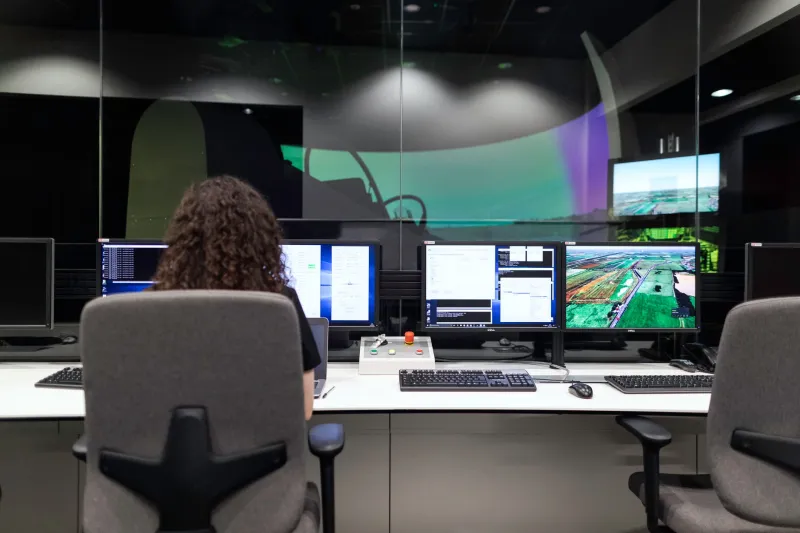
There is a familiar ritual among IT certification candidates. Weeks of flashcards, practice exams, and late-night review sessions culminate in a single high-stakes morning. The candidate arrives at a testing center — or logs into an online proctoring session — and within the first ten minutes, something feels off. The chair is uncomfortable. The ambient hum of HVAC equipment is louder than expected. The proctor's check-in process ate twelve minutes off the mental warm-up window. None of these variables appeared in any study guide.
Yet cognitive performance research consistently demonstrates that environmental conditions are not neutral. They are active inputs that shape how accurately the brain retrieves information, manages working memory, and sustains concentration under pressure. For IT certification candidates in the United States, where exam fees routinely range from $200 to over $400 per attempt, treating the testing environment as an afterthought is a quiet but measurable form of financial and professional risk.
Why the Physical Environment Is a Cognitive Variable, Not a Background Detail
The science here is not speculative. Studies in environmental psychology have documented that noise levels, lighting quality, temperature, and even seat height affect error rates on complex cognitive tasks. When a candidate is navigating a 90-question AWS or Cisco exam, these stressors compound. The brain is already operating under retrieval pressure; any additional cognitive load introduced by an uncomfortable or unpredictable environment reduces the bandwidth available for actual problem-solving.
This phenomenon is sometimes called the "dual burden" effect — the mind simultaneously manages the exam content and the environmental friction, and it is the exam content that loses resources in that negotiation. Understanding this dynamic is the first step toward eliminating it.
Pearson VUE Versus Prometric: The Difference Is Not Just Branding
Most major IT certifications in the US are delivered through one of two testing networks: Pearson VUE or Prometric. Candidates often select whichever center is geographically closest without investigating the experiential differences between the two.
Pearson VUE centers tend to serve a broader range of certification vendors and frequently operate in higher-traffic commercial locations. The check-in process is generally standardized and digitized, which can reduce wait-time variability. Prometric centers, by contrast, host a significant volume of professional licensing exams — medical, legal, financial — alongside IT certifications, and center environments can vary considerably by location.
The practical implication: the network brand matters less than the specific location's track record. Before scheduling, US candidates should read Google and Yelp reviews for the individual testing center, not the network as a whole. Look specifically for comments about noise levels, wait times, equipment reliability, and proctor professionalism. A Pearson VUE location with three recent complaints about malfunctioning keyboards is a worse choice than a Prometric center with consistently positive reviews, regardless of which vendor's logo is on the door.
If your target certification is available at multiple centers within a reasonable driving radius, treat center selection as a research task, not a convenience decision.
Online Proctoring: Flexibility That Comes With Its Own Risk Profile
Online proctored exams expanded dramatically during the pandemic and have remained a permanent fixture of the certification landscape. The appeal is obvious: test from home, eliminate commute stress, schedule at unconventional hours. However, online proctoring introduces a distinct set of environmental variables that in-person testing does not.
The candidate's home environment must meet strict technical requirements — a clean desk surface, no secondary monitors, a locked room, specific lighting conditions — and violations, even accidental ones, can result in exam termination. Beyond compliance, the home environment carries psychological associations with relaxation, distraction, and informal behavior that can subtly undermine the focused mental state high-stakes testing demands.
Candidates who have struggled with at-home focus during study sessions should weight this pattern heavily when choosing between in-person and online delivery. If sustaining 90 to 180 minutes of unbroken concentration in your home office has been difficult during practice exams, replicating that performance on exam day is an optimistic assumption.
Conversely, candidates who live in rural areas, face transportation constraints, or have documented anxiety around formal institutional settings may genuinely perform better in a controlled home environment. The decision is not universal — it requires honest self-assessment.
The Scheduling Decision Most Candidates Get Wrong
Time-of-day scheduling is among the most overlooked optimization variables in exam preparation. Chronobiology research — the study of biological timing and its effects on cognitive function — has established that most adults experience peak alertness and working memory performance in the late morning, roughly between 9:00 a.m. and 11:00 a.m. A secondary performance window often occurs in the late afternoon, around 4:00 p.m. to 6:00 p.m., for individuals who identify as evening-oriented.
Scheduling a certification exam at 7:00 a.m. because a slot was available, or at 2:00 p.m. because it fit neatly into a lunch break, ignores this biological reality. A candidate who consistently performs better on practice exams in the late morning should prioritize securing a late-morning testing appointment, even if that requires scheduling further in advance or selecting a less convenient location.
For online proctored exams, this flexibility is considerably easier to achieve. For in-person testing at high-demand centers — particularly in major metropolitan areas like New York, Chicago, Los Angeles, or Houston — desirable time slots can fill weeks in advance. Build your exam scheduling into your study plan early, not as a final administrative task in the last week of preparation.
A Practical Decision Framework for US Candidates
The following sequence of questions provides a structured approach to optimizing your testing environment before registration is finalized.
Step one: Identify all available delivery options for your specific exam. Not every certification is available via online proctoring. Confirm what your vendor permits before assuming flexibility exists.
Step two: Audit your home environment honestly. Can you guarantee a locked, quiet room for the full exam duration? Do you have a reliable internet connection with documented upload and download speeds that meet vendor requirements? If the answer to either question is uncertain, in-person testing is the lower-risk option.
Step three: Research individual testing center locations, not networks. Read recent reviews. Call the center and ask about their check-in process and typical wait times. A five-minute phone call can reveal information that saves you a failed attempt.
Step four: Schedule for your cognitive peak. Identify the time of day when your practice exam scores are consistently highest. Prioritize that window when booking. If your preferred slot is unavailable at your first-choice center, check alternative locations before settling for a suboptimal time.
Step five: Conduct a dry run. Drive to the in-person center at the same time of day as your scheduled exam, at least one week in advance. Confirm parking, entry procedures, and travel time under realistic traffic conditions. For online exams, run the vendor's system compatibility check tool on the exact device and network connection you plan to use on exam day.
The Competitive Margin You Are Leaving on the Table
IT certifications are graded against fixed passing thresholds. There is no curve, no partial credit negotiation, and no opportunity to explain that the testing center's air conditioning was distractingly loud. A score of 719 on an exam with a 720 passing threshold is a failed attempt regardless of the circumstances surrounding it.
Candidates who optimize only their knowledge base while ignoring environmental variables are competing at a self-imposed disadvantage. The marginal performance gains available through thoughtful testing environment selection are real, documented by learning science, and entirely within your control before you ever sit down at a keyboard.
At CertKiller Pro, the core principle is straightforward: pass on the first attempt by eliminating every controllable variable that works against you. The testing environment is one of the most controllable variables in your certification journey. Treat it accordingly.