Mind Over Exam: The Neuroscience-Backed Anxiety Protocols That First-Time Certification Passers Actually Use
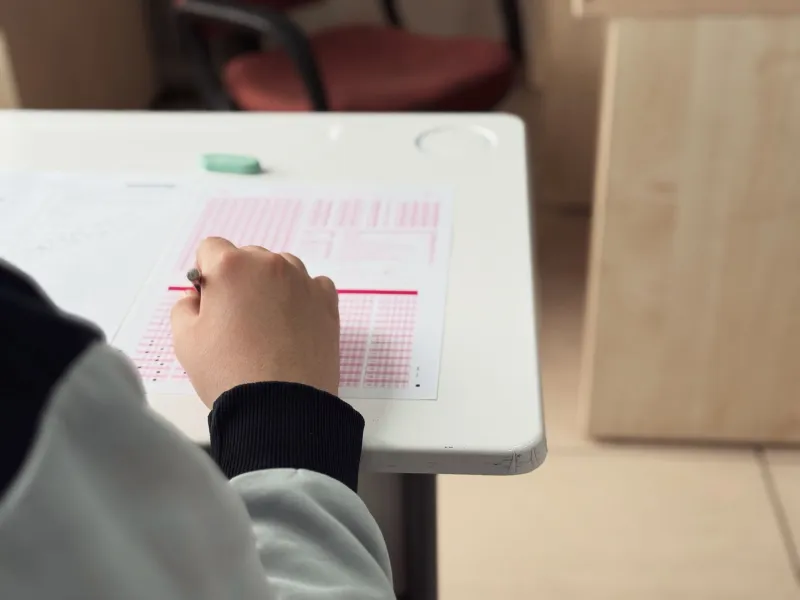
You have logged hundreds of study hours. You have completed practice exams until the question formats feel like old friends. You know subnetting cold. And yet, the moment you sit down at a Pearson VUE or Prometric testing terminal, something shifts — your palms dampen, your thoughts scatter, and a question you would answer correctly at your kitchen table suddenly looks like it is written in a foreign language.
This experience is not a reflection of your knowledge. It is a predictable neurological response to perceived threat, and it affects a significant portion of IT certification candidates regardless of how thoroughly they have prepared. What separates consistent first-time passers from repeat testers is often not additional technical knowledge — it is the deliberate management of that neurological response.
This guide translates research from military psychology, sports performance science, and clinical anxiety management into a concrete protocol you can apply on exam day.
What Is Actually Happening in Your Brain Under Pressure
When the brain perceives a high-stakes situation — and few scenarios feel higher-stakes than a $300–$500 certification exam with a career trajectory attached — it activates the hypothalamic-pituitary-adrenal axis. In plain terms, your body floods with cortisol and adrenaline. Heart rate climbs. Blood flow redirects away from the prefrontal cortex, the region responsible for working memory, logical reasoning, and complex problem-solving.
This is the cruel irony of exam anxiety: the stress response physiologically impairs the very cognitive functions you need most. It is not weakness. It is biology. And because it is biology, it responds to specific interventions.
Research published in journals covering performance psychology consistently demonstrates that candidates who employ structured pre-performance routines — what researchers call "pre-performance rituals" — show measurably lower cortisol levels and higher accuracy on complex cognitive tasks than those who do not. Military snipers, emergency room physicians, and elite athletes have used variations of these protocols for decades. There is no reason IT certification candidates should not benefit from the same science.
The Breathing Protocol That Changes Your Physiology in Four Minutes
The single most evidence-supported, immediately accessible anxiety intervention is controlled breathing — specifically, a technique the US Navy SEALs refer to as tactical breathing, also known in clinical settings as box breathing.
The mechanics are straightforward: inhale for four counts, hold for four counts, exhale for four counts, hold for four counts. Repeat this cycle for four to five minutes before entering the testing center.
This pattern activates the parasympathetic nervous system, effectively counteracting the fight-or-flight cascade. Studies from institutions including Stanford University's Department of Psychiatry have documented measurable reductions in subjective anxiety and improvements in sustained attention following brief controlled breathing sessions. For the IT candidate, this means walking into the testing room with prefrontal cortex activity closer to baseline — the cognitive state in which you actually studied.
Practice this technique during your study sessions, not just on test day. The body learns associations, and if controlled breathing becomes a consistent pre-study ritual, its calming effect will transfer more reliably to the exam environment.
Building a Pre-Exam Ritual That Signals Competence
Top performers across high-pressure disciplines do not simply show up and hope for the best. They construct repeatable pre-performance sequences that serve two functions: reducing decision fatigue and priming the brain for focused execution.
For IT certification candidates, a practical pre-exam ritual might look like this:
The Night Before: Complete a final, low-intensity review — not cramming, but a light pass through summary notes or flashcards. Eat a protein-rich dinner. Limit screen exposure after 9 PM to protect sleep quality. Sleep is not optional preparation; it is the consolidation phase in which your brain integrates everything you studied.
The Morning Of: Eat a balanced breakfast that stabilizes blood glucose. Avoid excessive caffeine, which amplifies the physiological anxiety response. Arrive at the testing center 20–30 minutes early to allow your nervous system to acclimate to the environment. Use those minutes for box breathing, not last-minute cramming.
At the Terminal: Before reading the first question, spend 60 seconds on controlled breathing. Read the exam instructions slowly, even if you have read them before. This deliberate pacing signals to your brain that the situation is manageable — not an emergency.
Cognitive Reframing: The Tool That Changes How Pressure Feels
Research from Harvard Business School, particularly work by Alison Wood Brooks, has demonstrated that reappraising anxiety as excitement — a process called cognitive reappraisal — measurably improves performance on challenging tasks. The physiological signatures of anxiety and excitement are nearly identical; the difference is interpretive.
Instead of telling yourself to "calm down" before an exam (which your nervous system will largely ignore), try replacing that internal instruction with: "I am prepared, and this challenge is an opportunity to demonstrate that preparation." This is not motivational platitude — it is a documented cognitive intervention that reduces performance-impairing rumination.
Similarly, if you encounter a difficult question during the exam, practice what cognitive behavioral therapists call "defusion" — observing the anxious thought without fusing with it. Acknowledge the discomfort, flag the question, move forward, and return to it later. The act of progressing through easier questions rebuilds momentum and restores confidence.
What Repeat Testers Rarely Address
Candidates who sit for the same certification multiple times frequently attribute their struggles to insufficient technical knowledge and respond by studying harder. In many cases, however, the limiting factor is unmanaged anxiety compounded by a growing fear of failure — what psychologists call performance anxiety with an avoidance loop.
If you have failed a certification exam despite feeling well-prepared, it is worth conducting an honest post-exam debrief. Did you blank on material you knew? Did time pressure cause you to rush through questions? Did your confidence deteriorate mid-exam? These are symptoms of anxiety dysregulation, not knowledge gaps, and they require a different remediation strategy than additional study hours.
Mental preparation is not supplementary to technical preparation. For many candidates, it is the primary lever remaining to pull.
Putting It Together: A Repeatable Exam-Day Protocol
The following framework consolidates the techniques above into a structured sequence you can refine through practice:
- Seven days out: Begin incorporating box breathing into your daily study routine.
- Two days out: Shift to review-only mode. No new material. Prioritize sleep.
- Night before: Light review, early dinner, screens off by 9 PM.
- Morning of: Balanced breakfast, limited caffeine, arrive early.
- At the center: Four minutes of box breathing in your car or a quiet area before check-in.
- At the terminal: Sixty-second breathing pause before question one. Read deliberately.
- During the exam: Flag difficult questions and move forward. Return with fresh perspective.
The candidates who pass on the first attempt are not always the most technically proficient people in the room. They are frequently the most composed. Study guides will prepare your knowledge base. This protocol prepares the mind that applies it.