Expiration Over Score: Why the Date on Your Certification Matters More Than the Number Beneath It

The IT certification industry has conditioned professionals to fixate on a single metric: the pass score. Study guides are built around it. Practice exams simulate it. Study plans are calibrated to exceed it. Yet the number printed on your certificate is, in most professional contexts, entirely invisible to the people evaluating your credentials. What hiring managers, procurement teams, and HR systems frequently examine first is something far more mundane — and far more consequential — than your performance on exam day. They look at the date.
More precisely, they look at how much life your credential has left.
The Validity Window Is Not a Formality
Every major vendor certification carries an expiration timeline. Cisco's CCNA is valid for three years. CompTIA's Security+ requires renewal every three years as well. AWS certifications expire after three years from the date of issue. Microsoft's role-based certifications follow similar patterns. These timelines are well-documented, widely understood, and routinely ignored in practice.
The problem is not that professionals forget their certifications expire. The problem is that they earn credentials without mapping them against the professional milestones where those credentials will matter most. A certification earned too early in a career transition can expire before the transition is complete. A credential obtained late in a vendor's exam lifecycle — just before a major version update — may be perceived as outdated before its official expiration date even arrives.
Timing, in other words, is not a peripheral consideration. It is the axis around which the entire return on investment of a certification rotates.
The Early Earner Problem
Among professionals who are building credentials ahead of a planned career move, the instinct to certify early feels logical. Get ahead of the curve. Demonstrate initiative. Build the resume before the opportunity arrives.
This instinct carries a structural risk that is rarely discussed openly. If you earn a three-year credential 18 months before you anticipate entering the job market — or before your employer is likely to recognize it in a compensation review — you are consuming the most valuable portion of that credential's shelf life during a period of relatively low return. By the time you need the certification to work hardest for you, it may have 18 months or fewer remaining. Some applicant tracking systems and manual screening processes flag credentials with less than 12 months of validity remaining as functionally expired, regardless of their technical status.
The result is a forced recertification cycle that was entirely avoidable with more deliberate planning. You pay the exam fee again. You invest study hours again. You absorb the scheduling disruption again — all because the original timing decision was driven by enthusiasm rather than strategic mapping.
The Late-Lifecycle Credential Risk
On the opposite end of the spectrum, professionals who certify close to a major exam version update face a different but equally damaging problem. Vendors retire exam versions on published schedules, and new versions typically introduce enough content changes to create a visible gap between what a legacy credential signals and what the current market expects.
An IT professional who passed a certification on a version that was retired six months later is not technically expired — their credential remains valid under the original terms — but the market perception can shift meaningfully. Interviewers familiar with the updated exam content may probe harder on topics the legacy version did not cover. Project teams adopting the latest platform features may question whether a credential earned on an older exam version reflects current competency.
This is a softer risk than hard expiration, but it is real. The practical defense is straightforward: monitor vendor exam version roadmaps before scheduling your exam. Most vendors publish retirement timelines well in advance. Earning a credential on an exam version with fewer than six months of remaining availability is a timing decision that deserves explicit justification.
Mapping Your Certification Calendar to Professional Milestones
The most effective approach to credential timing is reverse engineering. Rather than asking when you can pass an exam, ask when you need the credential to be actively working for you — and then calculate backward.
If you anticipate a job search in 24 months, a three-year certification earned today will have roughly 12 months of validity remaining when you enter the market. That is a narrow window. Delaying the exam by 12 months means the credential will be at full strength precisely when you need it most.
If your employer's compensation review cycle runs annually and certifications are recognized in Q1, earning a credential in Q4 of the prior year positions it for maximum immediate return. Earning the same credential in Q2 means waiting nearly a year before the credential converts to financial recognition.
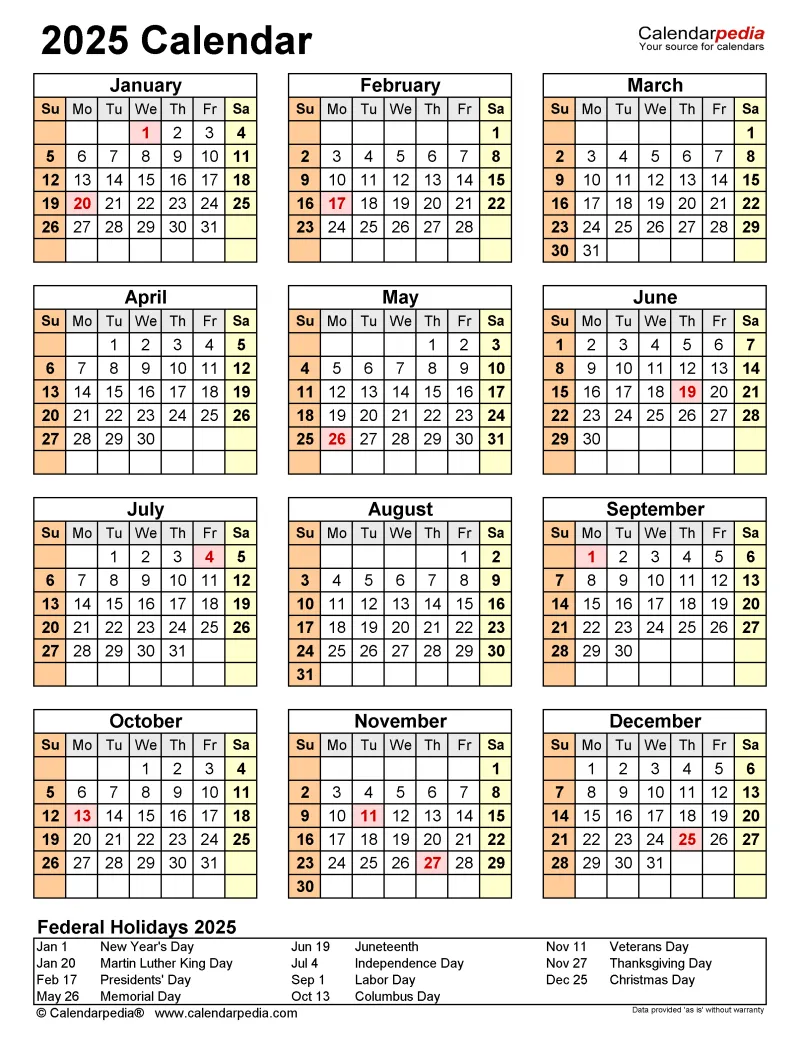
These calculations are not complicated. They require nothing more than a calendar, a published expiration policy, and a clear-eyed assessment of when each credential needs to perform. What they do require is the discipline to think about certification timing as a deliberate variable rather than a byproduct of when you happen to feel ready.
Emergency Recertification: The Most Expensive Timing Failure
The most financially damaging version of poor certification timing is the emergency recertification scenario. This occurs when a professional discovers — typically during a job application process or a contract renewal negotiation — that a critical credential has expired or is days away from expiring.
Emergency recertification is expensive in every dimension. Exam fees are paid at full price with no time to source employer reimbursement. Study time is compressed, increasing the statistical probability of a first-attempt failure. Scheduling windows may be limited, particularly for proctored exams with high demand. And the psychological cost of studying under genuine deadline pressure, rather than structured preparation, produces a qualitatively worse learning experience.
All of this is avoidable with a single habit: maintaining a living document that tracks every active credential, its expiration date, and the professional milestone it is intended to support. Review that document quarterly. Treat an approaching expiration the same way you treat an approaching tax deadline — not as an event to manage reactively, but as a known obligation that rewards early attention.
The Score Is a Threshold, Not a Trophy
Passing a certification exam is binary. You pass or you do not. The score above the passing threshold communicates relatively little about professional competency in most hiring contexts, and it communicates nothing about whether the credential will be viable when you need it.
The professionals who extract the highest career value from their certification investments are not necessarily the ones who study hardest or score highest. They are the ones who understand that a credential is a time-bound asset — one that depreciates on a fixed schedule regardless of how well it was earned. Managing that depreciation deliberately, and aligning expiration windows with professional inflection points, is the discipline that separates a well-constructed credential portfolio from an expensive collection of dates.
Your exam score got you through the door. Your exam timing determines how long that door stays open.